Showing posts with label Shakespearean Sonnet. Show all posts

Wednesday, April 17, 2024

ONE MORE OR LESS LINE CROW 17

  Happy National Poetry Month!

(For new poetry writing videos, see the COAXING POEMS tab above.)


Hello Poetry Friends! If you visited earlier this month, you may have noticed a change my National Poetry Month project title. For my National Poetry Month Project this year, I had originally planned to study crows and share a new crow poem each day of April with the number lines in each poem corresponding to the date. The plan was to write 1-line poem on April 1...and go all the way up to a 30-line poem on April 30. For a variety of personal and poetic reasons, I have changed the project. The poems have lengthened to 15 lines...and now they decrease from 15 back down to 1. Hence the new name: ONE MORE OR LESS LINE CROW. 

To do so, simply:

1. Choose a subject that you would like to stick with for many days. You might choose something you know lots about...or like me, you might choose something you will read and learn about throughout April.

3. Write a new poem for each day of April 2024 and decide if you would like to match your line breaks to the date in any way. You might correspond the number of lines in your poem to the date. For example, the poem for April 1 will have 1 line. The poem for April 30 will have 30 lines. You may wish to switch it up as I have, writing increasing-line poems from 1-15 lines for this first half of April and then decreasing-line poems for the second half of the month. OR....invent your own idea! 

4. Teachers and writers, if you wish to share any ONE MORE OR LESS LINE... subjects or poems, please email them to me or tag me @amylvpoemfarm. I would love to see what your students write and to know that we are growing these lines...and our understandings of different subjects...together.

17 Crows, Fourteen Lines
Photo by Amy LV


Students - Oh, I do love a sonnet! 

A sonnet, if you are wondering, is a fourteen line poem with a special rhyme pattern and a special beat. Each line in this poem has ten syllables, and if you listen for the stresses, you will hear daDA daDA daDA daDA daDA as the meter of each line. This special beat even has a name - iambic pentameter. I always tap my fingers while writing the iambic pentameter (daDA daDA daDA daDA daDA) lines of sonnets.

You may read about today's particular type of sonnet - a Shakespearean sonnet - in the below explanation from Poets.org. Click the link to if you wish read about different types of sonnets.

Shakespearean Sonnet

The second major type of sonnet, the Shakespearean, or English sonnet, follows a different set of rules. Here, three quatrains and a couplet follow this rhyme scheme: abab, cdcd, efef, gg. The couplet plays a pivotal role, usually arriving in the form of a conclusion, amplification, or even refutation of the previous three stanzas, often creating an epiphanic quality to the end. 

You might wish to notice the rhyming words in this poem. I am most happy with the near rhymes (rhymes that are close but not perfect), something I mentioned earlier this month that I am hoping to experiment more with in my writing.

Thank you for joining me for ONE MORE OR LESS LINE CROW...

To learn about more National Poetry Month projects and all kinds of April goodness, visit Jama Rattigan at Jama's Alphabet Soup where Jama has generously gathered this coming month's happenings. Happy National Poetry Month!

xo,

Amy

ps - If you are interested in learning about any of my previous 13 National Poetry Month projects, you may do so here.

Please share a comment below if you wish.
Know that your comment will only appear after I approve it.
If you are under 13 years old, please only comment 
with a parent or as part of a group with your teacher.

Friday, September 24, 2021

Something Small (& A Sonnet)


A Little Friend
Photo by Amy LV


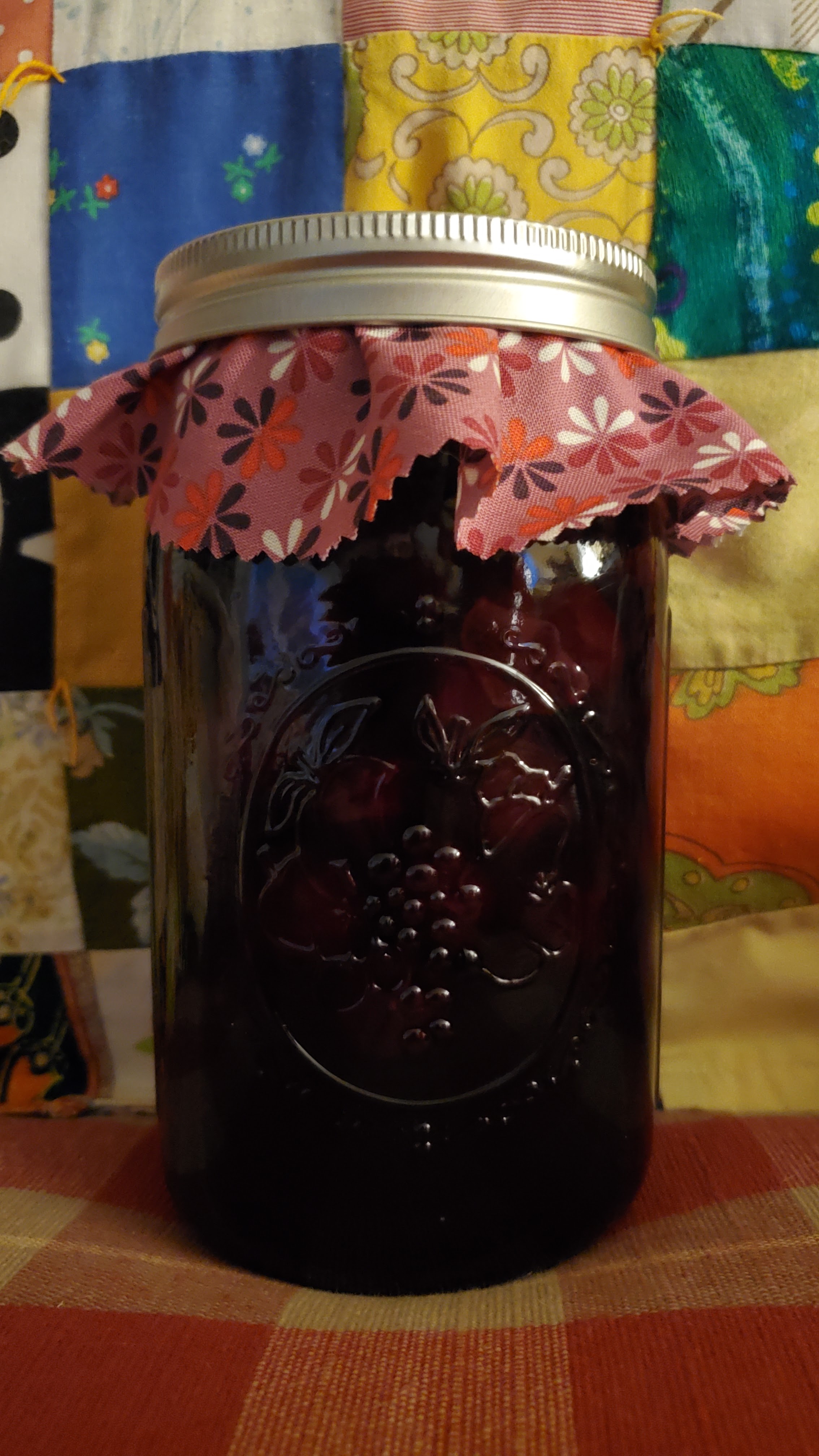
Students - Isn't this snail I found this week so cute? Earlier in the week, I was making concord grape juice (easiest recipe ever, see HERE), and as I washed the grapes, we met. I did exactly what the poem says the speaker did: I brought the snail outside, set her (him?) in the weeds by the shed, and said goodbye. Then, I kept thinking about the experience.

This Week's Concord Grape Juice
Photo by Amy LV

One thing about writing is that when you do so regularly, you see your life in new ways. When something interesting happens to you, you think, "Oh! I might write about that!" You might not aways write about it at that moment, but it's like you put a bookmark in your mind, remembering that you have an idea to write about later.

Later, I went to my trusty Ron Padgett book, THE TEACHERS & WRITERS HANDBOOK OF POETIC FORMS, and once again I fell in love with sonnets. Some of you may know that I have shared many sonnets here.

An Old Favorite
Photo by Amy LV

There are different kinds of sonnets. Often sonnets are written in iambic pentameter, which is a meter that sounds like DaDUM DaDUM DaDUM DaDUM DaDUM (10 syllables, accents on every other syllable). A Shakespearean sonnet rhymes like this:

a
b
a
b

c
d
c
d

e
f
e
f

g
g

Each letter above stands for one line (14 lines), and each letter stands for one rhyme. So, line 1 (a) rhymes with line 3 (a), line 2 (b) lines with line 4 (b), line 5 (c) rhymes with line 7 (c), line 6 (d) rhymes with line 8 (d), line 9 (e) rhymes with line 11 (e), line 10 (f) rhymes with line 12 (f), and line 13 and 14 rhyme with each other (g). Go ahead and check my poem above!

You should notice that two lines of my poem break the traditional sonnet pattern - lines 9 and 11 (e) do not rhyme, and this is aok. Poets get to decide these things about their own poems. Feel free to play with a form and then when it does not work for you...free yourself from it!

Drafting
Photo by Amy LV

One thing I most like about sonnets is how the last two lines often give the meaning, or the big thought. And I do wonder...how can something as tiny as the snail I met feel at the same time so big and magestic and important?

This week, consider paying attention to the small things that cross your path. These may be living creatures or they may be small objects or they may be a mix of both. What do you wonder about them? What does what you notice mean? What meaning might you make?

Laura is hosting today's Poetry Friday roundup at Small Reads for Brighter Days with her poems in response to the Poetry Princesses Challenge. Please know that all are welcome each Friday as folks share poems, poem books, poetry ideas, and friendship.

Saturday, April 30, 2016

Wallow in Wonder Day 30 - Ending as I Begun


Welcome to Day 30, the final day of of Wallow in Wonder!  

For my 2016 National Poetry Month project, I will celebrate learning and writing from learning, writing poems from each daily Wonder at Wonderopolis.  As I did with my Dictionary Hike in 2012, I am looking to surprise myself with new inspiration daily.  This year, such inspiration will show up in my inbox each morning. I will print it and carry each Wonderopolis Wonder around all day...and in the afternoon or evening, I will write and post the poem for the next day.  

I invite anyone who wishes to take this challenge too.  Just read today's wonder over at Wonderopolis, and write a poem inspired by it for tomorrow.  Share it tomorrow at your own site, and if you wish to link in my comments for others to find (or share your poem there), please feel free to do so tomorrow, the day after the Wonder is published at Wonderopolis.  If you would like to share any ways you have used Wallow in Wonder or your own site (safe for children only please), please feel free to do so in the comments.

My April Poems Thus Far

April 1 - So Suddenly - a poem inspired by Wonder #1659 
April 2 - Thankful Journal - a poem inspired by Wonder #1660
April 3 - The Storm Chaser - a poem inspired by Wonder #779
April 4 - A Jar of Glitter - a poem inspired by Wonder #641
April 5 - To Make Compost - a poem inspired by Wonder #1661
April 6 - Deciding Now - a poem inspired by Wonder #1662
April 7 - Hummingbird's Secret - a poem inspired by Wonder #1663
April 8 - Limits - a poem inspired by Wonder #1664
April 9 - Sundogs - a poem inspired by Wonder #1665
April 10 - Perspective - a poem inspired by Wonder #128
April 11 - At the History Museum - a poem inspired by Wonder #115
April 12 - Seventy-Five Years Ago Today - a poem inspired by Wonder #1666
April 13 - Homer's Poem - a poem inspired by Wonder #1667
April 14 - The Right - a poem inspired by Wonder #1668
April 15 - 5:00 am - a poem inspired by Wonder #1669
April 16 - Writing - a poem inspired by Wonder #1670
April 17 - Sometimes - a poem inspired by Wonder #194
April 18 - Once - a poem inspired by Wonder #192
April 19 - Eat It - a poem inspired by Wonder #1671
April 20 - Chatty Green Tomato - a poem inspired by Wonder #1672
April 21 - This Argument We're Having - a poem inspired by Wonder #1673
April 22 - After a Week in Foster Care - a poem inspired by Wonder #1674
April 23 - Pay Attention - a (recycled) poem inspired by Wonder #1675
April 24 - Please Don't Ask - a poem inspired by Wonder #201
April 25 - Mama Kangaroo's Poem - a poem inspired by Wonder #447
April 26 - Not Anymore - a poem inspired by Wonder #1676
April 27 - If We Were Whales - a poem inspired by Wonder #1677
April 28 - Written on a Paper Airplane - a poem inspired by Wonder #1678
April 29 - Under My Umbrella - a poem inspired by Wonder #1679

And now for Day 30, the final day of Wallow in Wonder!


Building a Home
by Amy LV


Students -  Well, I end this month in a circular way, with the same form I began it.

Today's poem is a sonnet, the fourth of this National Poetry Month.  April 1 (So Suddenly), April 9 (Sundogs), and April 16 (Writing) also featured English - or Shakespearean - sonnets. The difference here is that while my other sonnets only rhymed some lines, in this one you can find that each line has a match.

Something interesting about the English sonnet form is that you will notice how the first many lines (in this case twelve) all focus on one thing - what the speaker can make out of paper - but then at line 13, there is a turn, or a change.  For the final couplet, the speaker turns away from his or her own skill to marvel at the master of paper...wasps.  I admit to enjoying thinking, tapping, and writing in imabic pentameter, the meter of this form.

Count the syllables in each line.  What do you notice?  You might wish to try writing one line this way.  It is good practice to tune our ears by writing in different meters.

Thank you to all of you who have stopped by to visit The Poem Farm throughout National Poetry Month.  It has been great fun for me to take on this Wallow in Wonder challenge, and I very much enjoyed the stretch and surprise I experienced from each Wonder poem.  I enjoyed reading the Wonders, writing from them, reading these poems aloud, and making the watercolor paintings which I have kept together in this one book.

Wonder Watercolor Book
Photo by Amy LV

As this celebratory month closes, please remember that I have three giveaways, all closing at midnight.  Here they are:

Giveaway #1 - It has been a delight this week to host teacher Emily Callahan and her students from Kansas City here at The Poem Farm.  Visit and comment on their post to learn about Popcorn and Poetry and to enter a giveaway for a Ralph Fletcher book.

Giveaway #2 - Stefanie Cole and her students from Ontario, Canada have been gracing Sharing Our Notebooks with their generosity and wisdom all month. This is a fantastic post full of notebook inspiration, a video clip, and a great book giveaway from Stefanie. Please check it out, and leave a comment over there to be entered into a giveaway for a Lynda Barry book.

Giveaway #3 - I am hosting a goodreads giveaway for 5 signed copies of EVERY DAY BIRDS, to be sent to 5 separate winners.  


Happy Day 30 of National Poetry Month 2016.  It has been a pleasure wallowing, wandering, wondering, and whiling away the days with you...

xo, 
Amy

Please share a comment below if you wish.